Friday, May 7, 2010

Uppadan


This is a traditional Keralite recipe which has had a slow death over the years. Very few households continue to make this dish today.

Ingredients:

  • Tamarind - 1 lemon sized ball
  • Raw rice - 1 tbsp
  • Fenugreek / Methi seeds - 1 tsp
  • Red chillies - 4
  • Ladysfinger - 1/4 kg
  • Mustard seeds - 1 1/2 tsp
  • Asafoetida - 1 tsp
  • Turmeric powder - 1 tsp
  • Curry leaves - a few
  • Green chillies - 3
  • Oil - 2 tsp
  • Salt to taste
  • Water as required

Method:
  • Dry roast rice, methi seeds and red chillies until brown. Grind into powder (not very fine nor very coarse).
  • Extract tamarind pulp.
  • Wash and cut the ladysfinger into 2 cm thick pieces.
  • Heat oil in a thick bottomed pan and add mustard seeds. When they splutter add ladysfinger and green chillies (slit in the middle). Fry well.
  • Add turmeric powder, asafoetida and curry leaves.
  • Add tamarind extract and salt.
  • Add 3 cups water. When it boils, add the powder. Bring to a boil.
  • Serve hot with rice and vadams or with mazhikkuvaratti.

Variation - Bitter gourd or fresh marathangalikkai can be used instead of ladysfinger in this recipe

Thursday, May 6, 2010

Thengai sevai (rice noodles)

Ingredients:


Ready made sevai - 1 pkt or sevai made at home as per recipe published in this blog

Mustard seeds - 2 tsp

Urad dal - 2 tsp

Chana dal - 1 tsp

Red chillies / Moru molagai - 4 (refer recipe of moru molagai published in this blog)

Curry leaves - a few

Grated coconut - 2 tbsp

Asafoetida - 2 tsp

Green chillies - 2

Salt to taste

Oil - 2 tsp


Method:


  • Pour oil in a deep bottomed pan, add mustard seeds, curd chillies, urad dal and chana dal. When the mustard seeds splutter, the curd chillies are done and the urad dal and chana dal turn red, add finely chopped green chillies, curry leaves and asafoetida.
  • Add the cooked sevai and grated coconut.
  • Mix well and serve

Urulaikizhangu (Potato) podimas


Another mouth watering recipe considered as a perfect accompaniment to vengaya (rose onion) sambar!

Ingredients:

  • Potatoes - 1 kg
  • Turmeric powder (optional) - 1 tsp
  • Grated coconut - 1 tbsp
  • Green chillies - 3
  • Lemon - 1 big
  • Salt to taste
  • Oil - 1 tsp
  • Mustard seeds - 2 tsp
  • Urad dal - 2 tsp
  • Curry leaves - a few
  • Asafoetida - 1 1/2 tsp

Method:

  • Boil the potatoes whole in a pressure cooker.
  • Cool, remove their skins and mash the potatoes finely.
  • Pour oil in a thick bottomed pan, add mustard seeds and urad dal. When the mustard seeds splutter and the dal turns red, add curry leaves, turmeric powder and asafoetida.
  • Add mashed potatoes and salt.
  • Mix well.
  • Coarsely grind the coconut and green chillies in a mixie and add to the potatoes.
  • Remove from flame, add juice of 1 lemon and mix well.
  • Serve with rice and sambar.

Cashew Burfi


Ingredients:

Cashew nuts - 1 cup
Maida - 2 cups
Sugar - 2 cups
Ghee - 1 cup
Cardamom powder (optional)- 1 tsp or rose essence (optional) - 1 tsp
Water - 1 cup

Method:

  • Heat the cashew nuts slightly so that they can be powdered easily. Crush into a fine powder in a mixie.
  • Pour 3/4 cup ghee in a thick bottomed pan, add maida and roast until it emits an aroma.
  • Remove from fire and keep aside.
  • Add sugar in the pan along with water.
  • Boil until the sugar syrup is of one thread consistency.
  • Add maida and cashew powder to the sugar syrup and stir for 5 minutes.
  • Remove from fire and keep stirring until the mixture does not stick to the sides of the pan.
  • Add cardamom powder / essence.
  • Pour onto a greased plate and cool for 5 minutes.
  • Cut into small squares and allow it to cool well.
  • Turn the plate upside down when completely cool and remove the pieces.
  • Store in air tight container.

Mysore rasam


Ingredients:
  • Tamarind - 1 lemon sized ball
  • Coriander seeds - 1 tbsp
  • Cumin seeds / Jeera - 2 1/2 tsp
  • Pepper - 1 1/2 tsp
  • Red Chilli - 1
  • Chana dal - 2 tsp
  • Curry leaves - a few
  • Grated Coconut (optional) - 3 tsp
  • Tomato - 2 medium sized
  • Salt to taste
  • Turmeric powder - 1/2 tsp
  • Asafoetida - 1 1/2 tsp
  • Mustard seeds - 1 tsp
  • Oil - 2 tsp
  • Water as required.

Method:

  • Soak tamarind and extract pulp. Add turmeric powder, salt, asafoetida.
  • Dice tomato into 1" thick cubes and add to the tamarind extract.
  • Boil the extract.
  • In the meantime, pour 1 tsp oil in a deep bottomed pan and roast chana dal, coconut, coriander, pepper, 1 1/2 tsp cumin seeds, curry leaves and red chilli until red.
  • Grind this into a smooth paste along with a little water.
  • Mix this paste with 5 glasses of water and strain.
  • Add this to the boiled tamarind extract.
  • Boil until bubbles are formed.
  • Pour oil into a deep bottomed pan and add mustard and cumin seeds. When they splutter add a few curry leaves and add to the rasam.
  • Serve hot with rice.

Parikkai vettal (sun dried bitter gourd)


Ingredients:

  • Bitter Gourd - 3 kg
  • Turmeric powder - 3 tsp
  • Salt - 1 tbsp (or to taste)

Method:

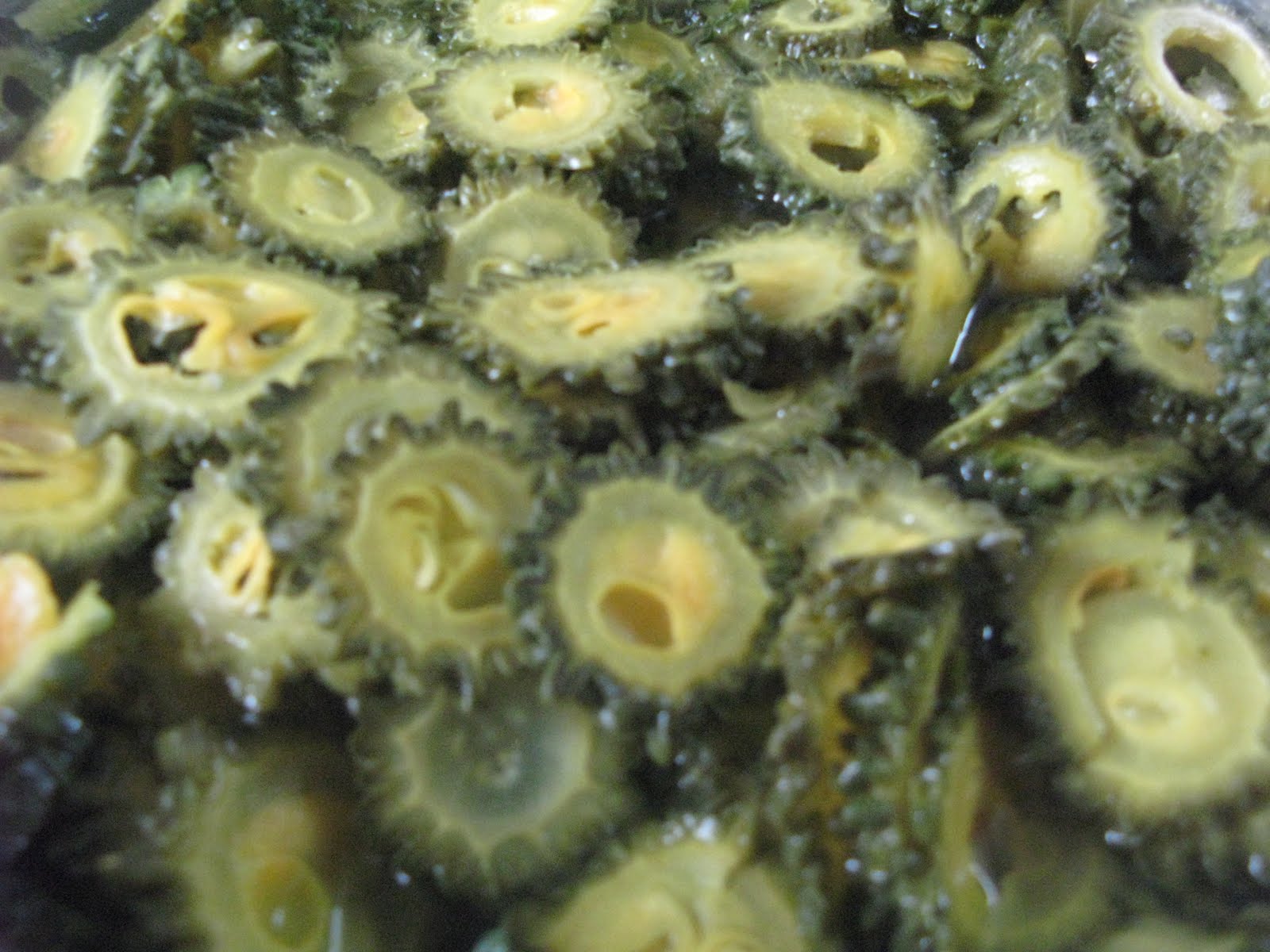
  • Cut the bitter gourd into 1 cm thick rounds. (If the rounds are too thick, they will not dry / fry properly; if they are too thin, they will break during the cooking / drying process). Hence, cutting right is the most important thing here.
  • Remove the seeds.
  • Boil water in a vessel. Add turmeric powder and salt. Add bitter gourd pieces. Cover and cook until the bitter gourd pieces are tender. Take care that they are not overcooked. Remove from flame as soon as they are tender.
  • Drain and cool.
  • Spread the pieces evenly onto a plastic sheet and let dry in the hot sun.
  • The pieces will take 2 days to dry.
  • Cool and store in airtight containers.
  • When required, deep fry them in oil and serve as a snack or as an accompaniment to a meal with rice and rasam / sambar or curd rice.
  • This can also be used for making other dishes. Keep watching this blog for more recipes on using sun dried bitter gourd.

Vazhathandu (banana stem) poduthuval


Ingredients:

  • Banana stem - 1 long piece
  • Grated coconut - 1 tbsp
  • Green chillies - 3
  • Curry leaves - a few
  • Mustard seeds - 1 tsp
  • Moong dal - 1 cup
  • Urad dal - 1 tsp
  • Salt to taste
  • Oil - 1 tsp
  • Turmeric powder - 2 tsp
  • Butter milk - 1 tbsp

Method:

  • Take water in a vessel, add 1 tsp turmeric powder and 1 tbsp buttermilk to it.
  • Remove the outer skin of the banana stem. Cut the inner portion into thin rounds and further cut it finely into small cubes.
  • Put the cut banana stem pieces into the buttermilk and turmeric water immediately. This prevents the stem from turning black.
  • Wash and soak the moong dal for 1/2 hour.
  • Put the cut banana stem pieces in a thick bottomed vessel, add enough water to cover the pieces, add 1 tsp turmeric powder and salt to taste. Cover the vessel and let cook for 5 - 10 minutes, stirring occasionally.
  • When the banana stem turns tender, remove from fire and drain. Keep aside.
  • In the same vessel cook the moong dal until it is tender and drain. Add to the cooked banana stem.
  • Pour oil into a deep bottomed pan, add mustard seeds and urad dal. When the mustard seeds splutter and the dal turns red, add curry leaves. Add the cooked banana stems and moong dal. Stir.
  • Coarsely grind coconut and green chillies in a mixie. Add this to the cooked banana stem.
  • Mix well and serve hot with rice and rasam / sambar / moru kootan.